Vehicle breakdowns are rarely convenient, and they almost always occur with a sudden, jarring finality. One moment you are cruising down the highway with the radio playing, and the next, your engine loses power, a tire blows out, or an ominous cloud of steam erupts from beneath the hood. Being stranded on the shoulder of a busy interstate or alone in a dimly lit parking lot is an incredibly stressful and vulnerable experience. The sensory overload of high-speed traffic flying past your disabled vehicle only compounds the anxiety, forcing you to make rapid decisions under immense pressure. Unfortunately, it is precisely this state of panic that leaves motorists susceptible to making poor choices, falling victim to roadside scams, or inadvertently causing further damage to their vehicles.
The core problem is that the vast majority of motorists, fleet operators, and even commercial property managers only begin to research transportation and roadside assistance options after a crisis is already well underway. When you are standing in the rain trying to hastily search for help on a dying smartphone, you are not in a position to properly vet credentials, compare equipment, or understand the nuances of a transport contract. This reactive approach frequently leads to rushed decisions, exorbitant out-of-pocket costs, and the dispatching of mismatched equipment that can severely damage a vehicle’s drivetrain or suspension.
The most effective solution is to proactively understand the different tiers of roadside transport before an emergency ever arises. The roadside assistance industry is highly specialized, with different fleets equipped to handle vastly different scenarios. A truck designed to pull a compact sedan out of a ditch is completely inadequate for moving a loaded commercial freight liner, just as a company specializing in removing illegally parked cars may not be equipped to handle a delicate post-collision extraction.
By categorizing providers by weight class, preparing for after-hours emergencies, and understanding the complex logistics of collision transport, drivers and fleet managers can ensure safe, efficient, and cost-effective vehicle relocation. This comprehensive guide will break down the essential facets of professional vehicle transport, empowering you to make informed decisions and build a reliable network of contacts long before you hear the dreaded sound of a failing engine.
Evaluate Response Times and Fleet Capabilities Before an Emergency Strikes
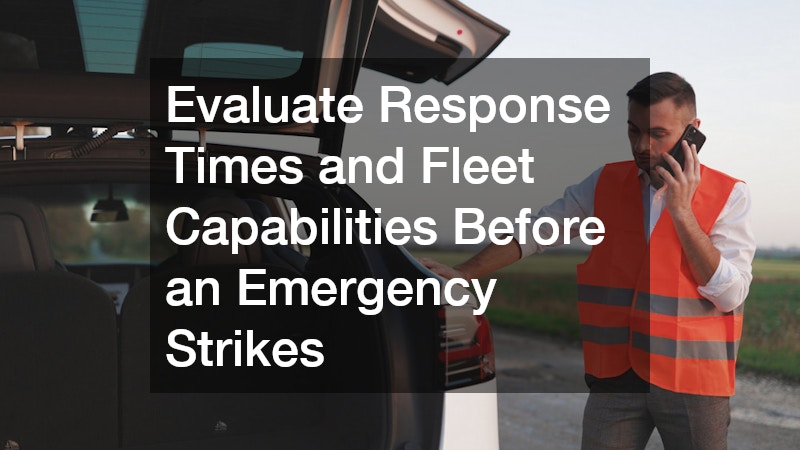
When a vehicle becomes inoperable, the immediate instinct is to call the very first number that appears in a search engine. However, treating all transport providers as interchangeable is a fundamental mistake that can lead to hours of waiting or catastrophic mechanical damage. Evaluating the response times and fleet capabilities of various providers in your community is a critical preparatory step. You need to know exactly what kind of hardware is being dispatched to your location and whether that hardware is compatible with your specific vehicle’s drivetrain.
The primary distinction you must understand is the difference between flatbed transport and traditional wheel-lift methods. A flatbed truck features a long, hydraulic incline that allows a vehicle to be driven or winched completely off the ground. This is the gold standard for transporting all-wheel-drive (AWD) and four-wheel-drive (4WD) vehicles. If an AWD vehicle is pulled with two wheels on the ground, the center differential will continue to spin, rapidly overheating and effectively destroying the transmission within just a few miles. Conversely, a wheel-lift truck—which elevates the drive wheels and leaves the trailing wheels on the pavement—is perfectly safe for standard front-wheel-drive sedans and is often vastly more maneuverable in tight urban environments or low-clearance parking garages.
To ensure you are never caught off guard, take the time to evaluate local towing companies while you are sitting comfortably at home. Read through community forums, check consumer protection bureaus, and look for transparent pricing models. You want to identify businesses that maintain diverse fleets capable of handling multiple scenarios. Understanding these mechanical prerequisites allows you to dictate exactly what kind of tow truck services are dispatched to your location, ensuring that the rescue operation does not become a secondary source of mechanical failure.
Actionable Steps for Evaluating Providers:
-
Identify your drivetrain: Check your vehicle’s owner’s manual to confirm whether it is AWD, 4WD, FWD, or RWD, as this entirely dictates the type of transport equipment required.
-
Audit community reviews: Look beyond star ratings; read detailed reviews that mention specific response times, driver professionalism, and billing transparency.
-
Inquire about fleet diversity: Call providers to ask if they operate both flatbeds and wheel-lifts, ensuring they can accommodate different environments and vehicle types.
-
Understand dispatch logistics: Ask if they utilize GPS tracking for their drivers, which allows for highly accurate estimated times of arrival during a crisis.
-
Check insurance compliance: Verify that the company carries comprehensive garage keeper’s liability insurance to cover any potential damage that might occur while your vehicle is in their possession.
Build a Preparedness Kit and Vet Providers for After-Hours Support
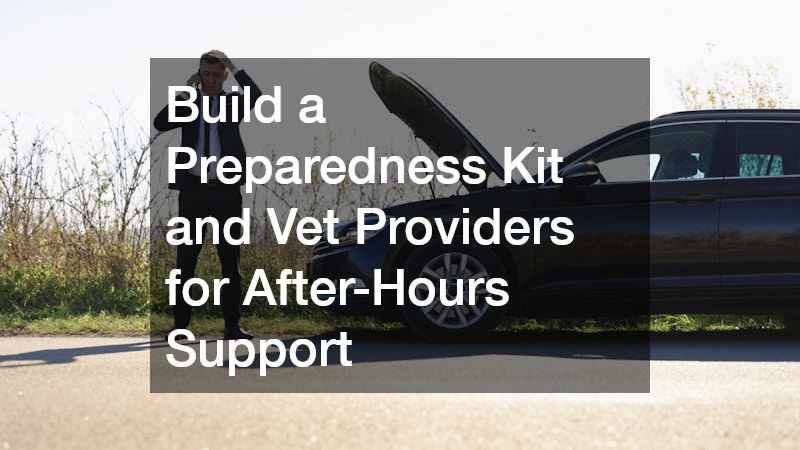
Emergencies do not respect standard business hours. In fact, vehicle breakdowns that occur late at night or during the early hours of the morning present a significantly elevated level of danger. Visibility is drastically reduced, the volume of impaired or fatigued drivers on the road increases, and the ambient temperature can plummet. If your engine dies on a desolate stretch of highway at two in the morning, your primary concern shifts instantly from mechanical repair to personal survival and safety. Planning for these late-night scenarios is non-negotiable.
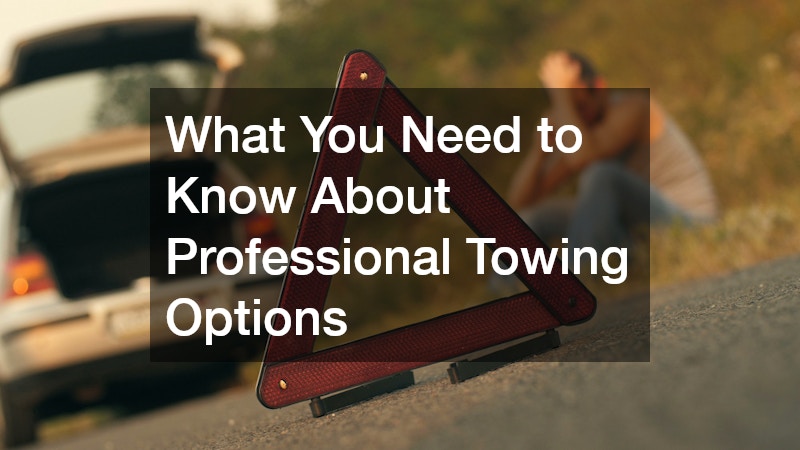
The foundation of after-hours safety is a well-stocked emergency preparedness kit kept securely in your trunk. When the electrical system fails, you lose your hazard lights and cabin heat. Your kit must compensate for this loss of vehicle functionality. High-visibility reflective triangles and LED road flares are essential for warning oncoming traffic of your presence. Thermal blankets, a first-aid kit, non-perishable water, and a high-capacity power bank for your mobile phone can be the difference between a minor inconvenience and a life-threatening ordeal. You must assume that help will take longer to arrive in the middle of the night, and you must be equipped to wait safely.
Equally important is knowing exactly who will answer the phone when you call for help. Many businesses advertise round-the-clock availability, but the reality is often quite different. You do not want to be shivering on the shoulder of a highway only to be routed to an automated answering machine or an answering service that merely takes messages for the morning shift. You need to vet and identify genuine 24 hour towing services that maintain active, fully staffed dispatch centers and have drivers on rotation throughout the night. A reliable local towing service will have a live dispatcher who can immediately pinpoint your location, assess the safety of your situation, and give you a realistic timeframe for an operator’s arrival.
Actionable Steps for After-Hours Preparedness:
-
Assemble a comprehensive safety kit: Pack DOT-approved reflective triangles, battery-operated LED flares, a high-lumen flashlight, and extra batteries.
-
Include survival essentials: Store thermal emergency blankets, heavy-duty work gloves, bottled water, and chemical hand warmers in a waterproof container.
-
Test your communication lines: Ensure you keep a dedicated, fully charged power bank and a charging cable in your glovebox specifically for emergency phone use.
-
Call and verify dispatch: Before committing to a provider, call their emergency number late at night to confirm a live, local dispatcher actually answers the phone.
-
Prioritize your physical safety: If your car is disabled in an active lane of traffic at night, exit the vehicle safely if a barrier is available; if not, keep your seatbelt fastened and wait for law enforcement.
Navigate Post-Collision Protocols to Ensure Vehicle and Passenger Safety
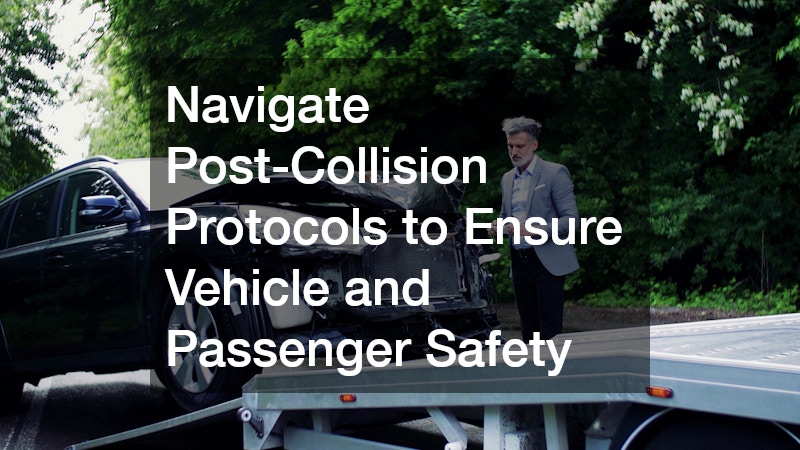
The aftermath of a traffic collision is a scene of immense chaos and sensory overload. Adrenaline surges through the body, frequently masking the pain of soft-tissue injuries and making it incredibly difficult to think logically. Smoke from deployed airbags, leaking vehicle fluids, and the shock of the impact create a highly volatile environment. In these critical moments, the actions you take can significantly impact your physical well-being, the preservation of evidence for insurance adjusters, and the safety of other motorists on the road.
Your immediate priority must always be safety. If the vehicles are drivable and there are no severe injuries, move them out of the active lanes of traffic to a shoulder or nearby parking lot. If the vehicles are immobilized, activate your hazard lights, deploy your emergency markers, and move yourself and your passengers safely behind a guardrail or barrier. Once you are safe, contact law enforcement immediately. A formal police report is absolutely vital for the upcoming insurance claims process. While waiting for the authorities, it is imperative that you resist the urge to clear debris or attempt makeshift repairs on a compromised vehicle frame.
Extracting a vehicle that has sustained severe structural damage, or one that has been pushed down a steep embankment, requires highly specialized rigging and winching techniques. This is where you must rely on a professional accident recovery service rather than a standard transport request. These specialists utilize complex pulley systems, boom trucks, and specialized straps to pull mangled vehicles out of precarious situations without snapping axles or further crushing the cabin. Additionally, you must be hyper-vigilant against “wreck chasers”—unsolicited operators who listen to police scanners and arrive at crash scenes uninvited, often pressuring disoriented victims into signing predatory contracts. Always request a specific tow truck service through your insurance provider or the responding police officer to ensure your vehicle is taken to a legitimate, secure impound lot without exorbitant, hidden fees.
Actionable Steps for Collision Management:
-
Secure the immediate perimeter: Turn off the engine to reduce fire risk from ruptured fuel lines, activate hazard lights, and set up reflective warning triangles well behind the crash site.
-
Document the scene comprehensively: Before the vehicles are moved (if it is safe to do so), take extensive photographs of the damage, the license plates, the road conditions, and the resting positions of the cars.
-
Decline unsolicited help: Never allow a truck operator who arrives uninvited to hook up your vehicle. Firmly state that your insurance company has already dispatched an authorized provider.
-
Remove personal belongings: Before the vehicle is loaded onto the bed, retrieve your registration, insurance cards, house keys, medications, and any valuable electronics from the cabin.
-
Specify the destination clearly: Tell the operator exactly where the vehicle needs to go—whether it is your preferred collision repair center or your driveway—to avoid having it taken to a high-cost daily storage yard.
Verify Weight Classifications and Specialized Rigging for Large Transport
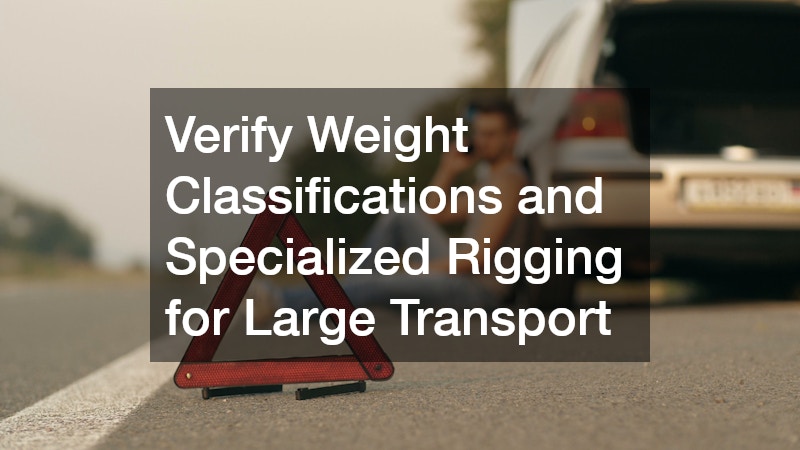
Moving a standard passenger sedan requires skill, but transporting massive, multi-ton commercial vehicles or oversized recreational assets introduces an entirely different realm of physics, engineering, and legal compliance. Weight classifications matter immensely. When a fleet manager’s semi-truck suffers a blown transmission, or a family’s motorhome blows a tire on a mountain pass, standard equipment is dangerously inadequate. Attempting to pull an oversized load with an undersized truck can result in snapped winch cables, destroyed braking systems on the transport vehicle, and catastrophic accidents on the highway.
Understanding Gross Vehicle Weight Rating (GVWR) is the first step in managing large-scale transport. Vehicles are divided into weight classes, and anything from a loaded delivery box truck to a fully articulated Class 8 semi-truck or a municipal cement mixer requires serious industrial power. To move these behemoths, you must contract a dedicated heavy duty towing company. These organizations utilize massive trucks equipped with 50-ton hydraulic winches, heavy-duty under-reach technology, and multiple axles to distribute the immense weight of the load. They understand how to safely drop the driveshaft of a commercial rig so the transmission isn’t destroyed during the journey, and they know how to route oversized loads around low-clearance bridges and weight-restricted roads.
Recreational vehicles present their own unique set of challenges. While a motorcoach might be heavy, it is also surprisingly fragile. The fiberglass body panels, low-hanging storage bays, and complex aerodynamic skirts can be easily crushed by standard wheel grids or chains. Transporting these luxury assets requires an rv towing service that utilizes extended wheelbases, specialized frame forks, and custom strapping techniques designed specifically for motorhomes. These operators know exactly how to secure the suspension and accommodate the extreme length of the vehicle, ensuring that a mechanical breakdown on your cross-country vacation doesn’t result in tens of thousands of dollars in structural damage to your rolling home.
Actionable Steps for Large Vehicle Transport:
-
Know your exact GVWR: Always have the unladen weight and the fully loaded Gross Vehicle Weight Rating of your asset readily available to provide to the dispatcher.
-
Ask about specialized rigging: Confirm that the provider has the specific frame forks, axle straps, and under-reach capabilities required for your vehicle’s make and model.
-
Discuss route planning: Because heavy and oversized loads are subject to municipal restrictions, ensure the operator has mapped a route that avoids low overpasses and residential weight limits.
-
Prepare the interior of RVs: Before a motorhome is moved, secure all loose interior items, latch all cabinets securely, and shut off propane valves to prevent interior damage or fire hazards during transit.
-
Verify commercial credentials: Ensure the operator possesses the appropriate commercial driver’s licenses (CDL) and heavy-duty endorsements required by the Department of Transportation.
Establish Clear Signage and Compliance Protocols for Unauthorized Parking
The realm of vehicle relocation extends far beyond the highway. For commercial landlords, retail property managers, and Homeowner Association (HOA) boards, managing the logistics of a parking lot is a daily operational challenge. Unauthorized parking is not merely a nuisance; it represents a significant liability. Abandoned vehicles take up valuable retail space, non-residents occupying tenant parking create community friction, and cars illegally parked in fire lanes or in front of loading docks create severe safety hazards and block emergency services. Managing this effectively requires a firm but strictly legal approach.
The process of removing a vehicle from a private lot is heavily regulated by state and municipal laws to prevent predatory practices. Property managers cannot simply attach a chain to an offending vehicle and drag it away. To handle these situations, property owners must partner with legitimate private property towing services. These specialized providers understand the complex legal framework required to perform non-consensual vehicle removals. They will help you establish the necessary infrastructure, which usually involves posting highly specific, legally compliant signage at every entrance to the lot. These signs must clearly state the parking rules, the fact that unauthorized vehicles will be removed at the owner’s expense, and provide the exact phone number and location of the impound lot where the vehicle can be retrieved.
When establishing a contract with one of these providers, it is imperative to audit their operational standards. A company that poorly maintains its fleet is a liability to your property. If an operator uses frayed winch cables or faulty hydraulics and drops a vehicle onto your asphalt, you could be entangled in a messy liability lawsuit. Therefore, you must ensure that the company you partner with adheres to a strict schedule of towing and recovery equipment service. A well-maintained fleet with pristine trucks, regularly inspected cables, and secure winch locks demonstrates professionalism and drastically reduces the risk of property damage during an extraction. This protects your organization’s reputation and ensures that the enforcement of your parking rules is handled safely and legally.
Actionable Steps for Private Property Management:
-
Audit local municipal codes: Research your city and state’s specific laws regarding non-consensual towing, including required grace periods and maximum allowable impound fees.
-
Install compliant signage: Ensure signs are highly visible, reflective, placed at all entrances, and contain the exact legal verbiage mandated by your local jurisdiction.
-
Establish a clear authorization protocol: Define exactly who within your organization (e.g., the property manager or head of security) has the legal authority to sign the authorization form for a vehicle’s removal.
-
Maintain photographic evidence: Before a vehicle is hooked up, require the operator to take time-stamped photos proving the vehicle was parked illegally (e.g., blocking a fire hydrant or taking up two reserved spaces).
-
Review the provider’s maintenance logs: Don’t hesitate to ask a prospective vendor about their fleet maintenance schedule to ensure they operate safe, reliable equipment on your property.
Conclusion
Navigating the complexities of vehicle breakdowns, accidents, and property management requires far more than a cursory internet search in a moment of panic. The transportation and recovery industry is incredibly diverse, equipped with specialized machinery designed to handle everything from a compact sedan with a flat tire to a rolled-over commercial freight liner. Attempting to cut corners or failing to match the specific needs of your vehicle with the appropriate equipment inevitably leads to further property damage, compromised safety, and inflated costs.
The most effective strategy you can employ is proactive preparation. By taking the time today to evaluate the capabilities of providers in your community, you insulate yourself against the vulnerability and stress of a roadside emergency. Building a proper safety kit ensures you can weather a late-night breakdown safely, while understanding the nuances of heavy-duty weight classifications guarantees that your largest investments are handled with the precision they require. For property managers, establishing legally compliant protocols protects your real estate assets while maintaining order and safety for your tenants.
Ultimately, the cheapest option is rarely the safest or the most reliable. Professional, well-maintained fleets operated by trained specialists provide the invaluable peace of mind that a vehicle will arrive at the mechanic, the body shop, or the impound lot in the exact condition it was picked up. Take the insights from this guide and use them to thoroughly vet and save the contact information for three different tiers of transport providers—standard, heavy-duty, and property management—in your smartphone or glovebox today. When the unexpected happens, you will be prepared to handle the situation with confidence, safety, and efficiency.